

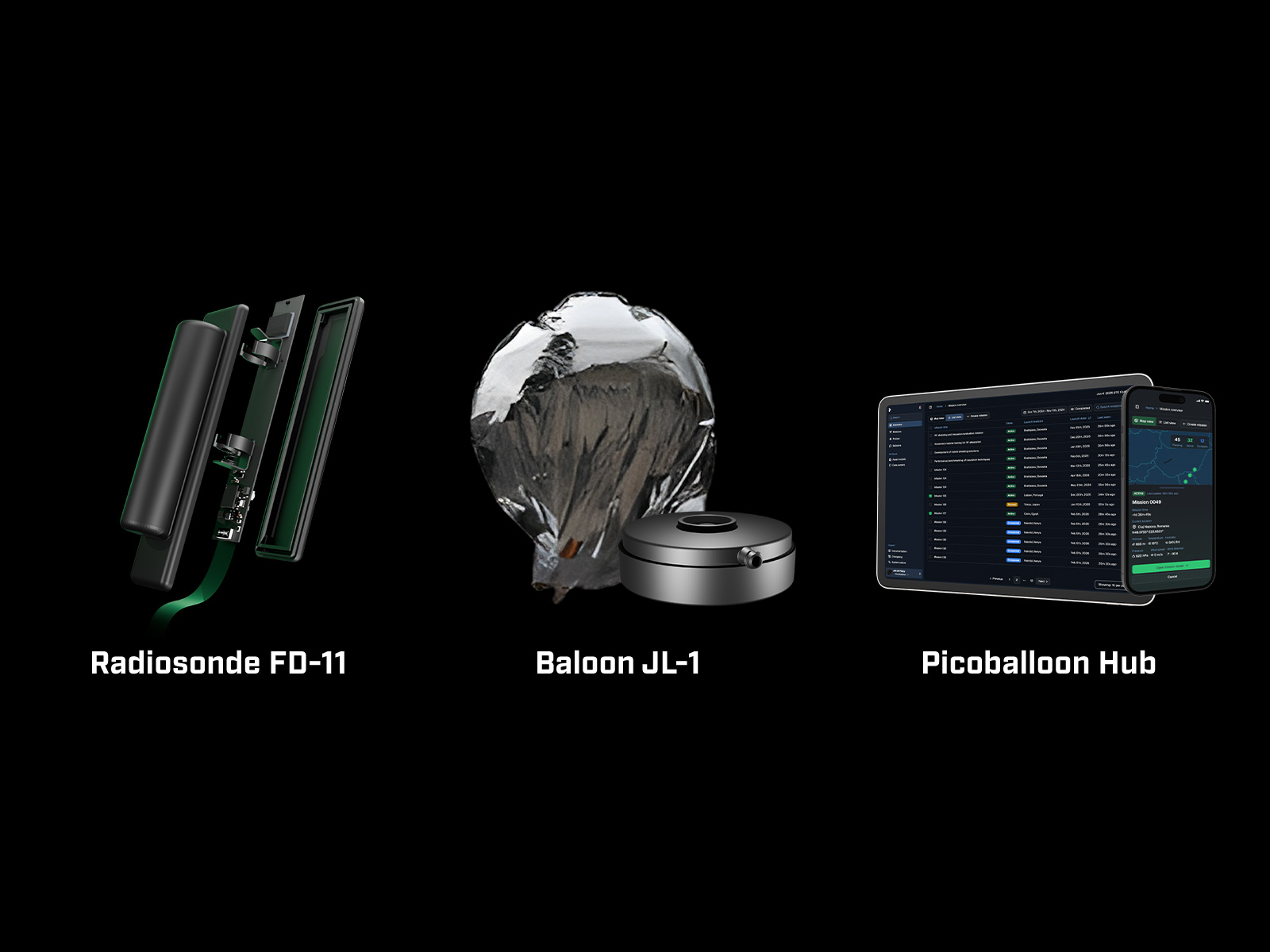
The Picoballoon system is a next-generation atmospheric observation solution designed to maximize the amount of atmospheric data while reducing operating costs. It combines an ultralight radiosonde, a long-duration superpressure balloon, and a cloud-based operations hub to support continuous, industry-standard atmospheric measurements with minimal logistics.
At its core is the FD-11 ultralight radiosonde, engineered for extreme efficiency. Weighing only 20 g including the battery, it measures standard meteorological variables such as temperature, humidity, and pressure, provides GNSS wind profiles, and includes an accelerometer for applications such as turbulence tracking. Thanks to its low-power hardware and firmware architecture, the FD-11 delivers more than 20× more measurements over its extended lifetime compared to conventional radiosondes.
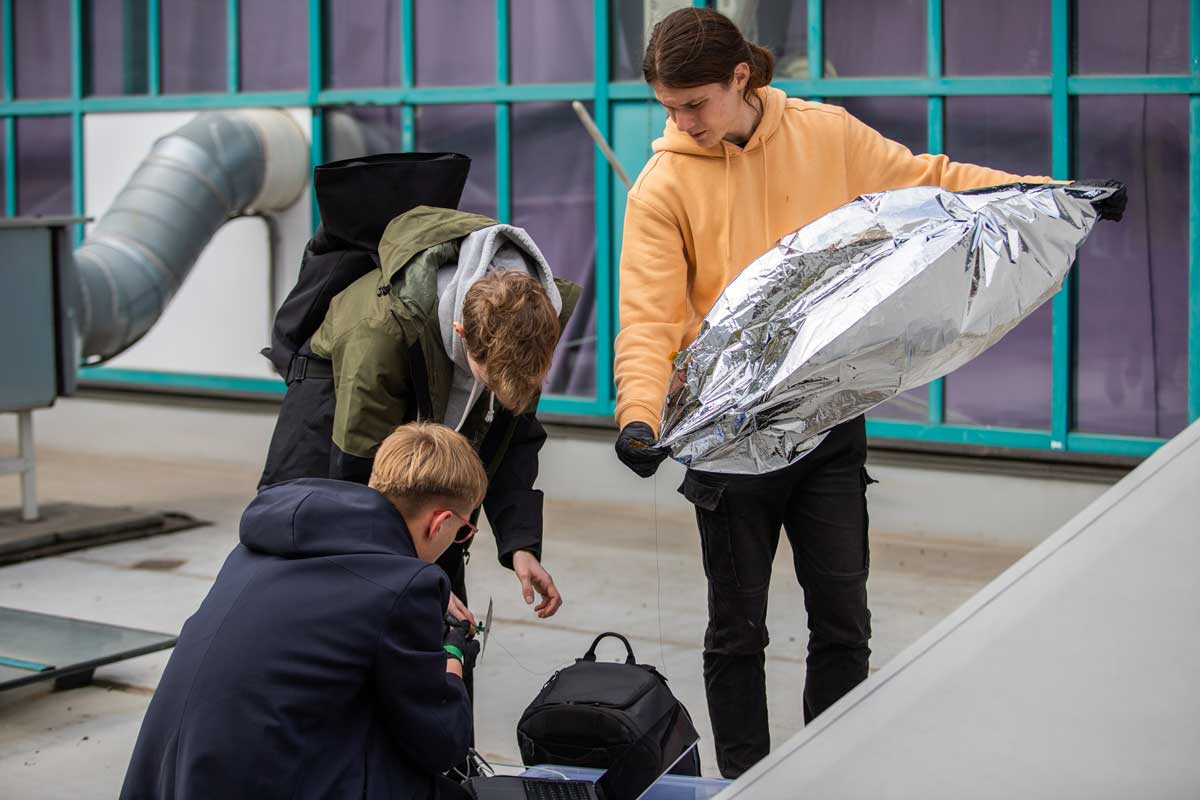
The JL-1 superpressure balloon is designed for long-duration flights of up to 50 days while reducing lifting gas consumption by 96% when combined with the FD-11. Made from aerospace-grade TritaX film, the balloon supports payloads of up to 50 g and enables adjustable float levels for targeted atmospheric sampling. Its integrated spring-loaded composite valve supports safe inflation with various lifting gases and precise mid-flight superpressure regulation.
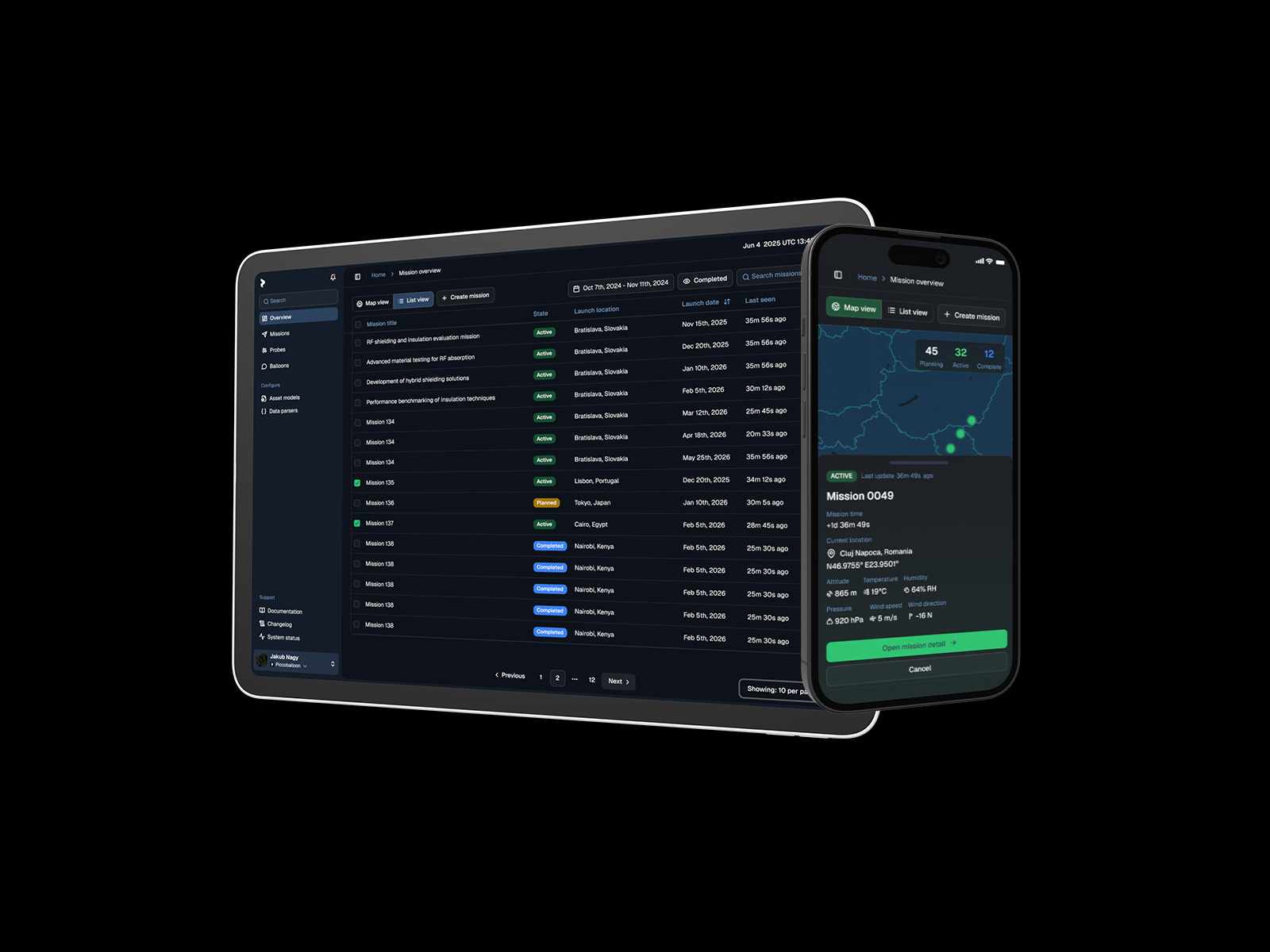
Completing the ecosystem is the Picoballoon Hub, a cloud-first operations platform for managing the full lifecycle of Picoballoon launches. It supports mission planning, tracking, radiosonde configuration, inventory management, flight path simulation, data analysis, and operational insights. By using LoRaWAN-based data reception across continental Europe and the US, the hub reduces the need for dedicated ground stations and data processing hardware, making high-altitude monitoring easier to manage from any device.
Together, these elements create a scalable and cost-effective system for long-duration atmospheric observation, day-to-day data collection, atmospheric research, and innovative environmental applications.